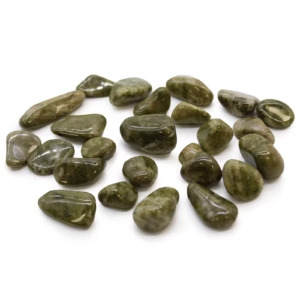
Explore our exclusive collection of Epidote specimens and infused products, curated for crystal enthusiasts and those seeking a deeper connection with nature’s minerals. This selection offers a range of high-quality geological treasures, from raw prismatic clusters to polished stones, perfect for enhancing your personal space or expanding your mineral collection.
Enhance Your Collection with Natural Epidote
Our Epidote collection highlights one of the most distinctive members of the complex silicates family, known for its striking pistachio-green hues and unique crystal formations. While not a fragrance itself, Epidote is often associated with themes of abundance and manifestation in the wellness community, making it a popular companion for aromatherapy rituals and meditative practices. Each specimen in our range is selected for its aesthetic appeal, showcasing the natural glassy luster and slender, striated columns that define high-quality mineral samples. Whether you are a dedicated collector or a newcomer to the world of geology, these stones provide a tactile and visual anchor for your home or workspace.
The quality of our Epidote varies from opaque, earthy masses to translucent, deeply colored crystals that interact beautifully with light. These pieces are ideal for display in areas where you seek to cultivate a sense of growth and renewal, as their vibrant green tones naturally evoke the vitality of the botanical world. Many of our customers choose to pair these minerals with their favorite home scents to create a complete sensory experience. By incorporating a physical element like Epidote into your wellness routine, you can build a more grounded and focused environment for reflection. When choosing a product, consider the form that best fits your lifestyle, such as a statement cluster for a mantlepiece or smaller tumbled stones for daily use.
- Striking pistachio-green to olive tones that provide a natural, calming visual aesthetic for any room.
- Durable prismatic crystal structures with a vitreous luster, ensuring long-lasting beauty for collectors.
- Versatile mineral forms including raw clusters, massive formations, and smooth tumbled stones.
- Pairs perfectly with earthy and botanical home fragrances to create a holistic wellness atmosphere.
How dramatic should your Epidote be?
| Form |
Character |
Best for |
| Large raw cluster |
Dramatic interlocking crystals |
Crystal grids and displays |
| Tumbled stone |
Smooth, tactile surface |
Pockets and meditation |
| Lighter yellowish-green |
More transparency and detail |
Bright, airy settings |
| Darker blackish-green |
Grounded, substantial feel |
Bolder display pieces |
How to Choose from This Category
When selecting the right Epidote for your needs, consider the primary purpose of the stone in your space. If you are looking for a centerpiece for a crystal grid or a decorative display, our large, raw clusters offer the most dramatic visual impact with their complex, interlocking crystals. For those who prefer a more portable option to keep in a pocket or use during meditation, tumbled Epidote provides a smooth, tactile surface that is comfortable to hold. Consider the color intensity as well; lighter, yellowish-green specimens often show more transparency and detail, while darker, blackish-green pieces offer a more grounded and substantial feel. Gifting a piece of Epidote is a thoughtful gesture for someone embarking on a new journey or seeking personal development, as it is widely regarded as a symbol of positive transformation.
- Decide whether you need a dramatic centerpiece for a room or a portable stone for daily meditation.
- Choose a large raw cluster for crystal grids or when you want a striking decorative display.
- Pick a tumbled stone to keep in a pocket or hold comfortably during meditation.
- Compare the lighter yellowish-green clarity with darker, more grounded blackish-green tones to find your mood.
- Gift Epidote to someone who is beginning a new journey or actively seeking personal transformation.
Frequently Asked Questions
What is the most common color for Epidote?
The most iconic and sought-after color for Epidote is a specific shade of yellowish-green often described as pistachio-green. However, depending on the iron content, it can also appear in shades of olive green, brownish-green, or even nearly black.
Is Epidote a hard mineral for jewelry use?
Epidote has a Mohs hardness of 6 to 7, which makes it relatively durable. While it is occasionally used in pendants or earrings, its perfect cleavage means it can be fragile if struck, so it is less common in rings intended for daily wear.
What is the difference between Epidote and Unakite?
Unakite is actually a metamorphic rock that contains Epidote along with pink orthoclase feldspar and clear quartz. While Epidote is a single mineral, Unakite is a combination of minerals that creates a distinctive green and pink mottled appearance.
How should I care for my Epidote specimens?
To maintain the natural luster of your Epidote, clean it gently with lukewarm, soapy water and a soft cloth. Avoid using harsh chemicals or ultrasonic cleaners, and store your crystals away from direct sunlight to preserve their vibrant color over time.
Where does the name Epidote come from?
The name is derived from the Greek word “epidosis,” which means “increase” or “addition.” This refers to the mineral’s unique crystal habit where one side of the base of the prism is longer than the other.